
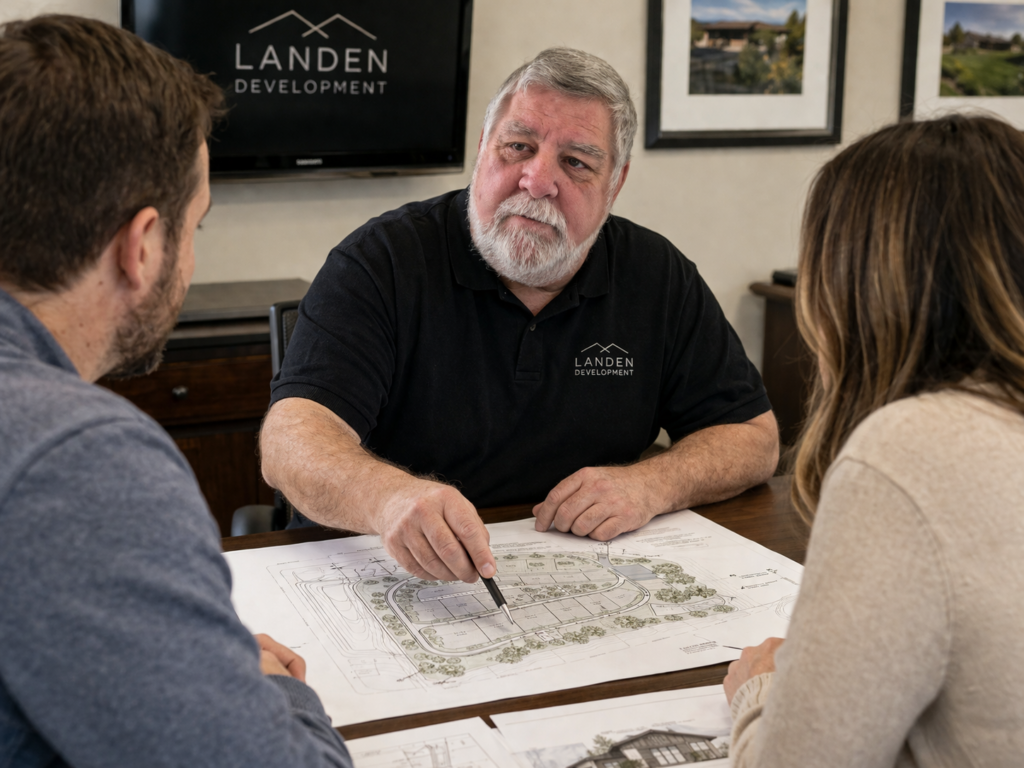
Many homeowners assume that custom home plans simply consist of floor plans and exterior elevations. In reality, a properly prepared custom home plan is much more than a set of drawings. It is a detailed roadmap that guides every stage of the building process, from site evaluation and budgeting to permit approvals and construction. At LANDEN Design Build, we believe the planning stage is one of the most important parts of any successful project. The more information that is incorporated into the plans before construction begins, the smoother the building process tends to be. As a custom home plan and builder in Calgary, Alberta, we look at far more than room sizes and exterior appearances. We focus on creating plans that work with the land, fit the client’s lifestyle, align with the budget, and can be built efficiently in the real world.
Every Great Home Starts With the Land
One of the biggest differences between custom home planning and selecting a stock house plan is that a custom home should be designed around the property.
Before any design work begins, we evaluate factors such as:
- Topography and slope
- Drainage patterns
- Sun exposure
- Mountain and valley views
- Access points
- Utility availability
- Septic requirements
- Well locations
- Building setbacks
- Easements and rights-of-way
These site conditions often influence where the home should be positioned and how the floor plan should be organized.
A well-designed home feels like it belongs on the property rather than simply being placed on it.
Designing Around How Your Family Lives
A custom home should be designed around your lifestyle, not around a pre-determined floor plan.
One of the first things we discuss with our clients is how they actually live.
Questions we often ask include:
- How often do you entertain?
- Do you work from home?
- Do you have children or grandchildren?
- Do you need a large garage or workshop?
- Do you plan to age in place?
- How important are outdoor living spaces?
The answers to these questions help determine how rooms should be connected and how the home should function on a daily basis.
A good floor plan doesn’t just look impressive; it makes everyday living easier and more enjoyable.
Structural Planning Is Built Into Every Design
Many of the most important parts of a custom home plan are things homeowners never see.
Behind every successful design is a structural system that ensures the home can be built safely and efficiently.
This includes:
- Foundation design
- Load-bearing walls
- Beam locations
- Roof systems
- Floor systems
- Structural engineering requirements
- How the mechanical works will interface with construction
A beautiful design that cannot be built efficiently often leads to unnecessary construction costs.
This is one of the advantages of working with a design-build company. The design team understands not only how the home should look, but also how it will actually be constructed.
Budget Planning Should Be Part of the Design Process
One of the most common mistakes homeowners make is designing a home first and worrying about the budget later.
Unfortunately, this often results in expensive redesigns when the project exceeds the available budget.
At LANDEN, we prefer to develop a preliminary construction budget early in the planning process.
This allows us to evaluate:
- Home size
- Architectural complexity
- Garage requirements
- Finish levels
- Site development costs
- Special features
Before final plans are completed.
The goal is to create a home that balances your wish list with your budget right from the beginning.
Detailed CAD Drawings Turn Ideas Into Reality
Once the preliminary design is finalized, detailed CAD drawings are prepared.
These drawings become the blueprint for construction and include information such as:
- Floor plans
- Exterior elevations
- Building sections
- Roof layouts
- Structural details
- Site plans
- Permit drawings
Every trade contractor involved in the project relies on these drawings to perform their work accurately.
The more detailed the plans, the fewer questions, delays, and construction surprises tend to occur during the building process.
Utility Planning Is Critical to a Successful Build
A complete custom home plan also addresses the systems that make the home functional.
This includes planning for:
- Electrical service
- Plumbing systems
- Heating and cooling systems
- Water supply
- Septic systems
- Internet and communication services
For acreage properties, these considerations become even more important because many services must be designed specifically for the site.
Early planning helps ensure these systems integrate properly with both the home and the property.
Outdoor Spaces Matter Too
Custom home planning extends beyond the walls of the house.
A complete design should also consider how the property will function as a whole.
This may include:
- Driveways
- Parking areas
- Outdoor living spaces
- Future shops or outbuildings
- Landscaping concepts
- Walkways
- Drainage systems
A well-planned site creates a seamless connection between the home and the surrounding property.
Final Review Before Construction Begins
Before construction starts, all aspects of the project should work together as a complete system.
This includes:
- Site planning
- Home design
- Structural requirements
- Utility servicing
- Budget considerations
- Permit requirements
Taking the time to resolve issues during the planning stage is far less expensive than making changes after construction begins.
That’s why we place such a strong emphasis on detailed planning and preparation before a shovel ever enters the ground.
Final Thoughts:
A custom home plan is much more than a set of drawings. It is a comprehensive roadmap that connects your land, your lifestyle, your budget, and your construction goals into a buildable design. At LANDEN Design Build, we believe great homes start with great planning. As a luxury acreage home builder in the Calgary Foothills, our focus is on creating thoughtful, practical, and highly detailed custom home plans that help clients move from concept to construction with confidence.
Whether you’re building on a city lot or a rural acreage, investing time in proper planning is one of the best decisions you can make. The result is a smoother construction process, better cost control, and ultimately a home that is designed specifically for how you want to live.